LIKE Lab seal logoLIKE Lab

Language Intelligence and
Knowledge Engineering Lab

szf@pku.edu.cn

Peking University

Language · Knowledge · Intelligence

Welcome to LIKE Lab

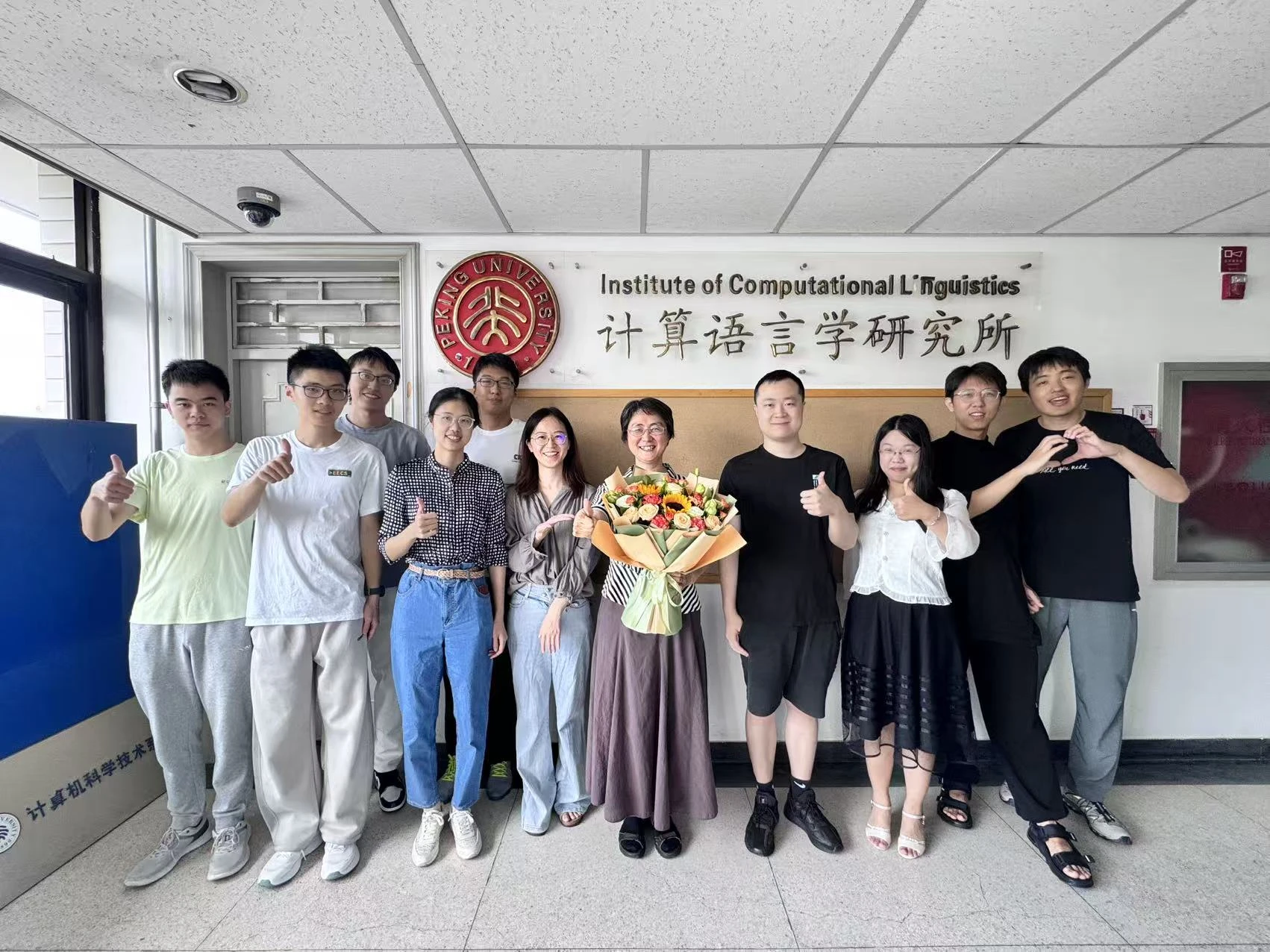
The Language Intelligence and Knowledge Engineering Lab (LIKE Lab) is based at the Institute of Computational Linguistics, School of Computer Science, Peking University, within the State Key Laboratory of Multimedia Information Processing. Led by Professor Zhifang Sui, we pursue frontier research in artificial intelligence, with a focus on natural language processing, large language models, and multimodal intelligence.

Our recent work spans the foundations, training, and applications of large models. We have made a series of advances in natural language processing and multimodal learning, with papers published at leading international conferences including ICLR, ICML, NeurIPS, ACL, CVPR, AAAI and EMNLP. Our alumni have joined leading LLM research and development teams at DeepSeek, Google DeepMind, Xiaomi MiMo, Tencent, Alibaba, ByteDance and so on, contributing to continued progress in AI research and its real-world applications.

We also work closely with industry, collaborating with ByteDance, Xiaomi, Tencent, Huawei and Baidu on LLM technologies and intelligent applications. Several of our students have contributed directly to the training and optimization of the DeepSeek, MiMo and Hunyuan model families, helping advance the next generation of large language models.

What we study

Research Interests

From understanding language to building intelligent systems.

Language Intelligence

We study how large language models learn, reason, and act. Our research spans pre-training, post-training, reinforcement learning, and efficient inference, with the goal of building more capable and reliable language intelligence.

Explore the research

Multimodal Intelligence

We connect language with perception to build models that understand and reason across modalities. Our work explores multimodal learning, visual grounding, and the understanding of images and narratives, alongside evaluation in interactive environments.

Explore the research

Knowledge Engineering

We investigate how knowledge is acquired, represented, and used by intelligent systems. Our research spans knowledge graphs, entity linking, and knowledge in language models, with an emphasis on interpretability, factual accuracy, and reliable reasoning.

Explore the research
Ideas in focus

Research Highlights

View all publications
NeurIPS 2026 · ED Track · Accepted

Claw-Eval

An end-to-end evaluation suite for autonomous agents that measures task completion, safety, and robustness using execution traces, audit logs, and environment snapshots.

Read paper
ICML 2026

R3: Stabilizing MoE Reinforcement Learning

Rollout Routing Replay reuses inference-time expert routing decisions during training. Aligning the two routers reduces training–inference mismatch and prevents MoE reinforcement learning collapse without compromising training speed.

Read paper
ICML 2026

FIRE: Learning to Navigate and Act on Real-World Files via Stateful Reinforcement Learning

Trains agents to navigate spreadsheets, PDFs, documents, and slides in a persistent sandbox. Stateful execution feedback helps models plan across multiple steps, recover from errors, and reason over real-world files.

Read paper
ACL 2026

HistLens: Mapping Idea Change across Concepts and Corpora

Uses sparse autoencoder features to trace how ideas evolve across concepts, corpora, and time. Shared, interpretable representations support comparative analysis of conceptual history, including ideas expressed implicitly.

Read paper
ACL 2026

Towards Stable and Effective Reinforcement Learning for Mixture-of-Experts

Identifies shifts in expert routing as a source of unstable MoE reinforcement learning. Router-Shift Policy Optimization accounts for this drift to improve training stability and performance on mathematics and code.

Read paper
Findings of ACL 2026

SelfBudgeter: Adaptive Token Allocation for Efficient LLM Reasoning

Learns to estimate and allocate reasoning tokens according to problem difficulty. Budget-guided reinforcement learning reduces average response length by 61% on math tasks while maintaining accuracy and supporting user-defined budgets.

Read paper
arXiv 2026 · Preprint

MOPD

Multi-Teacher On-Policy Distillation integrates the capabilities of specialized teachers into a single language model, distilling their guidance on the student’s own rollouts during post-training.

Read paper
CVPR 2026

GroundingME: Exposing the Visual Grounding Gap in MLLMs through Multi-Dimensional Evaluation

Evaluates visual grounding across discrimination, spatial relations, limited visibility, and rejection of ungroundable queries. A 1,005-example benchmark reveals substantial gaps in how multimodal models connect language to visual evidence.

Read paper
EMNLP 2024

A Survey on In-context Learning

A systematic overview of how language models learn from examples in context, covering training, prompt design, analysis, applications, and open challenges.

Read paper
ACL 2024

DeepSeekMoE

Advancing expert specialization through fine-grained experts and shared expert isolation, enabling more efficient mixture-of-experts language models.

Read paper
ACL 2024

Large Language Models Are Not Fair Evaluators

Uncovering positional bias in LLM-based evaluation and introducing a calibration framework that brings model judgments closer to human assessments.

Read paper
ACL 2024

Math-Shepherd: Verify and Reinforce LLMs Step-by-step without Human Annotations

Learns to verify and reward each step of mathematical reasoning using automatically generated supervision. The process reward model supports both answer selection and reinforcement learning, without human step-by-step annotations.

Read paper
Beyond the papers

Life at LIKE Lab

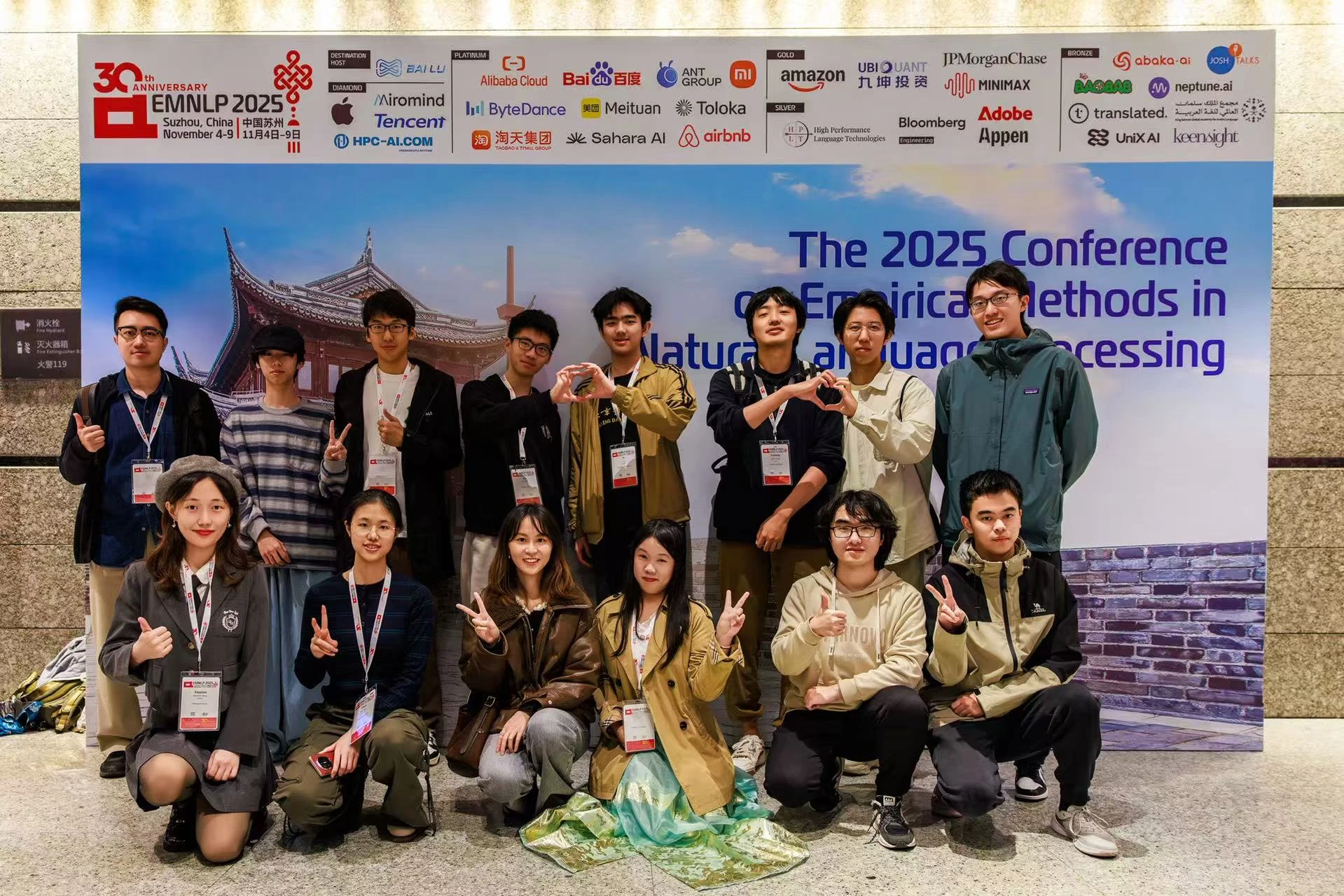
Shared meals, adventures, and discoveries — in the lab and beyond.

Meet the people
Get in touch

Let’s explore what’s next.

We welcome conversations about language intelligence, knowledge engineering, and opportunities for research collaboration.

Contact the lab
szf@pku.edu.cn
Institute of Computational Linguistics
School of Computer Science, Peking University
Beijing, China